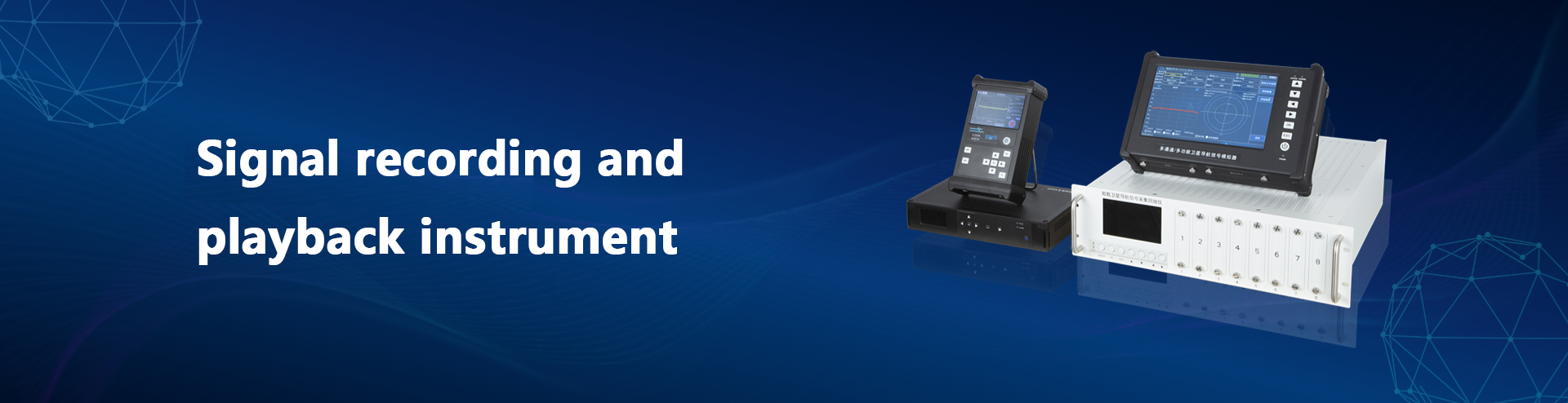
It has the characteristics of portability, miniaturization, lightweight, simple operation, and easy maintenance. It is applicable to the detection, maintenance and troubleshooting of navigation receivers in outfield conditions, and is widely used in military, aviation, navigation, transportation, power, Internet of Things and other fields.
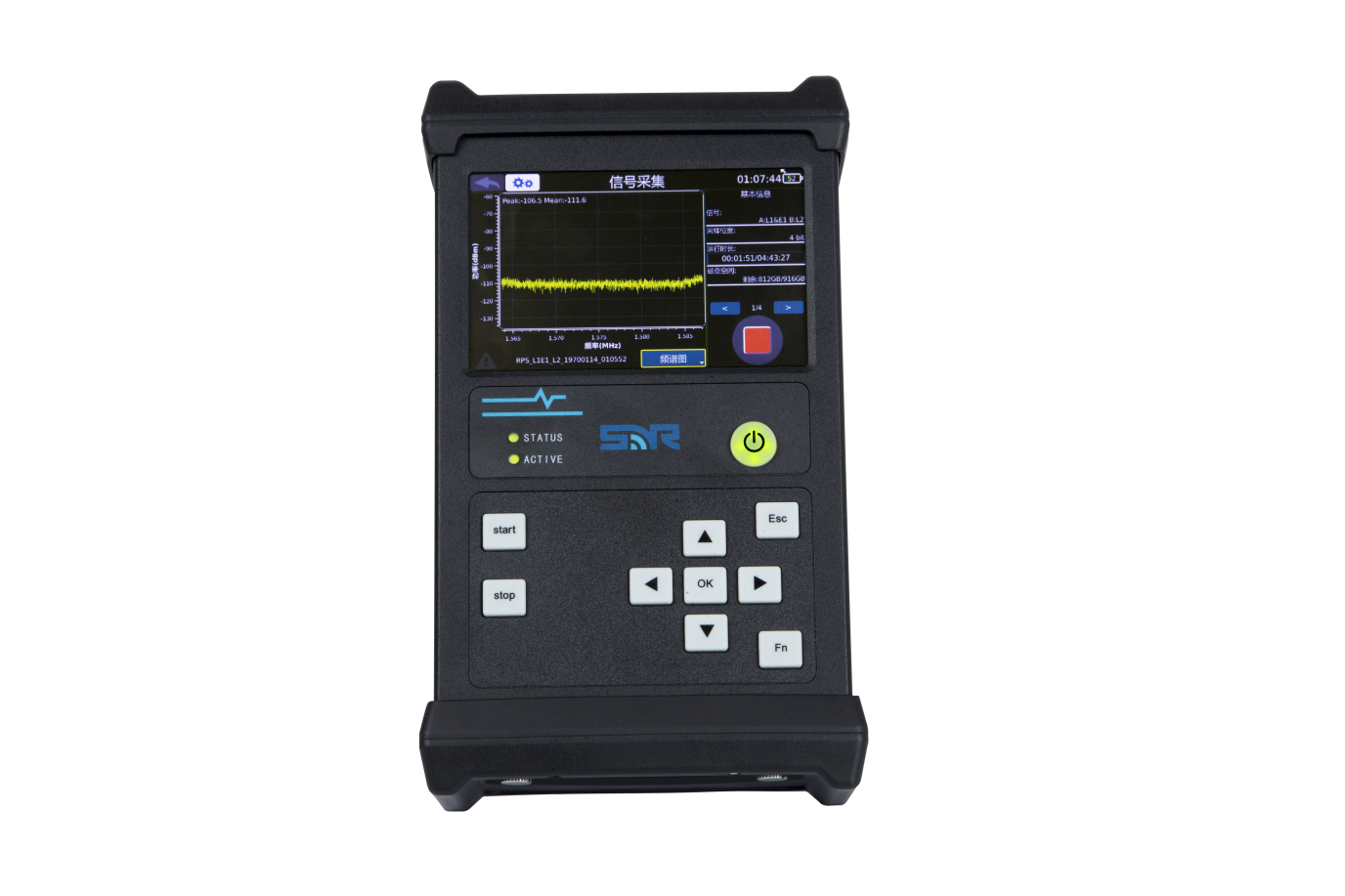
The RPS2000 portable satellite navigation signal acquisition and playback instrument is a portable GNSS signal acquisition and playback system. It can not only collect single or multiple RF signals in a fixed or mobile outfield environment in real time, but also record navigation signals generated by standard GNSS simulator simulation. It is the smallest complete solution that can truly record and playback satellite signals.
The RPS2000 has the characteristics of portability, miniaturization, lightweight, simple operation, and easy maintenance. The overall weight (including battery) is 1.9kg, and the built-in battery can continuously collect and playback for 4 hours. The hard drive adopts a pluggable design, and a single hard drive can support a maximum capacity of 4TB, which can meet the continuous recording of a single channel for 20 hours. It is applicable to the detection, maintenance and troubleshooting of navigation receivers in outfield conditions, and is widely used in military, aviation, navigation, transportation, power, Internet of Things and other fields.
具有便携小型化、轻量化、简洁操作、易于维护等特点。适用于外场条件下导航接收机的检测、维护和故障排查等,广泛应用于军事、航空、航海、交通、电力、物联网等领域。
 The scripted editing ability of the testing plan planning function and testing process allows users to plan and design the testing plan according to the testing requirements before the experiment, and edit the testing process. Users can manage and configure the testing scenarios and processes according to the testing needs of different receivers and different testing tasks and objectives, and use them as different testing templates.
 Perform manual or batch Test automation based on test scenarios and test processes, and have one click Test automation function for user terminal technical indicators.
 After each test project is completed, it can automatically analyze and evaluate the test data and generate test reports, with the function of automatic analysis and evaluation of user terminal technical indicators.
 Multiple testing and evaluation modes are available, including automatic, manual, and single mode.
 Real time analysis and evaluation of test data, capable of analyzing and comparing test data in real time, completing functional and performance indicators such as pseudo range measurement accuracy, positioning accuracy, channel consistency, bit error rate, etc., and automatically generating data processing reports.
 The real-time analysis and evaluation function of test data allows for knowing the statistical results of indicators without waiting until the end of the test, facilitating the timely termination of problematic receiver tests and saving testing time.
 Comprehensive display function: It can comprehensively display various information such as work status, simulation scenarios, positioning results, data processing reports, etc. in various forms such as data, tables, graphics, etc.
 Database management function, which can automatically classify, store, query, and count simulation and test data, and has automatic data storage and retrieval functions.
 Equipped with automatic evaluation of test results and automatic generation, printing, and export of test reports.
具有便携小型化、轻量化、简洁操作、易于维护等特点。适用于外场条件下导航接收机的检测、维护和故障排查等,广泛应用于军事、航空、航海、交通、电力、物联网等领域。
|
录制回放信号频点 |
|
|
BDS |
B1、B2、B3、RDSS-S、RDSS-L |
|
GPS |
L1、L2、L5 |
|
GLONASS |
L1、L2、L3 |
|
Galileo |
E1、E5、E6 |
|
NAVIC |
L5 |
|
QZSS |
L1、L2、L5 |
|
RF射频通道数目 |
|
|
信号录制通道 |
2个(可独立设置) |
|
信号回放通道 |
2个 |
|
信号录制 |
|
|
输入信号功率 |
-80dBm~-30dBm |
|
通道增益 |
20dB~70dB可调节 |
|
录制信号带宽 |
4.6875/9.375/18.75/23.4375/37.5/46.875/62.5/93.75MHz可设置 |
|
I/Q量化位数 |
2bit、4bit、8bit可设置 |
|
信号回放 |
|
|
输出信号功率 |
-80dBm~-30dBm |
|
功率调节范围 |
50dB |
|
功率调节步进 |
1dB |
|
带内杂散 |
≤-45dBc |
|
谐波抑制 |
≤-40dBc |
|
10MHz时钟信号 |
|
|
输入幅度 |
6±2dBm |
|
输出幅度 |
5~7dBm |
|
信号阻抗 |
50±10Ω |
|
输出频率稳定度 |
≤8.0×10⁻¹¹@1s |
|
1PPS秒脉冲信号 |
|
|
脉冲宽度 |
10us±1us |
|
信号幅度 |
≥3V |
|
信号阻抗 |
50±10Ω |
|
存储性能 |
|
|
磁盘存储容量 |
默认1TB SSD,可选2TB、4TB SSD,支持硬盘拔插更换 |
|
磁盘读写速率 |
≥120 MB/s |
|
磁盘存储时长 |
≥4h(4bit@62MHz,1T容量) |
|
物理特性 |
|
|
整机尺寸 |
≤230mm(长)×140mm(宽)×70mm(高) |
|
整机重量 |
≤2kg |
|
电源功耗 |
|
|
供电电压 |
200V~240V/AC,50Hz~60Hz(电源适配器) |
|
整机功耗 |
≤30W |
|
续航时间 |
≥4h(内置电池) |
| 仿真信号规模 | |
| 卫星通道数量 | |
| 多径信号数量 | |
| 信号精度 | |
| 伪距精度 | |
| 伪距变化率精度 | |
| 通道一致性 | |
| 信号动态 | |
| 仿真高程 | |
| 相对速度 | |
| 相对加速度 | |
| 相对加加速度 | |
| 外部轨迹实时性 | |
| 信号延迟 | |
| 数据更新率 | |
| 信号质量 | |
| 杂波抑制 | |
| 谐波抑制 | |
| 信号电平 | |
| 电平调节范围 | |
| 电平调节步进 | |
| 物理和电气性能 | |
| 整机尺寸 | |
| 整机重量 | |
| 电源、功耗 | |
Need help or have a problem?
Contact Us